Types of Rodents Found in New Jersey Homes
New Jersey homeowners deal with three rodents most often: house mice, Norway rats, and roof rats. Knowing which one you're dealing with changes where it's likely nesting, how it's getting in, and what kind of removal and exclusion work actually solves the problem. Here's how to tell them apart, and what each one means for a Monmouth County home.
House Mice
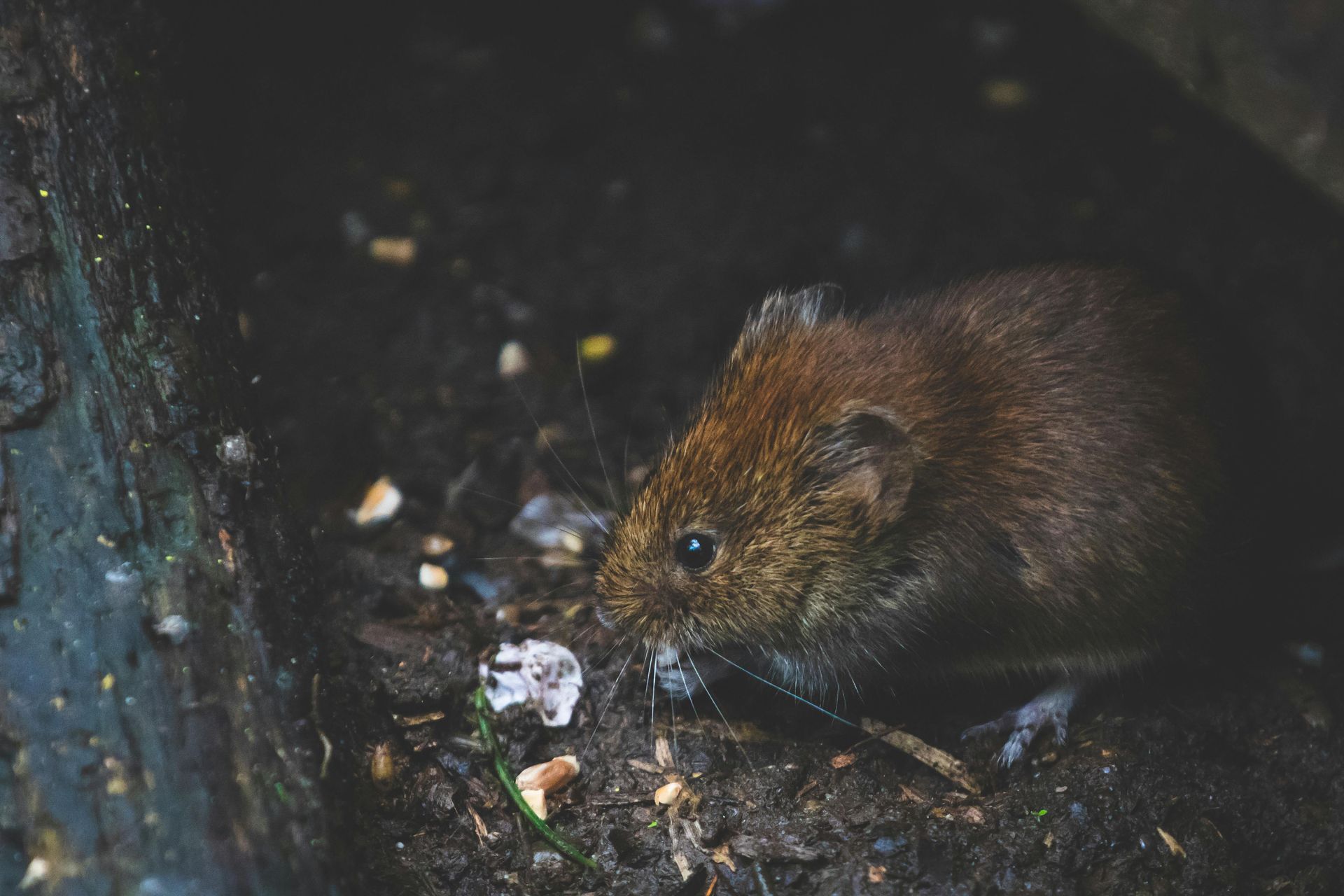
House mice are the most common rodent in New Jersey homes. They're small — usually 2.5 to 3.75 inches long, not counting the tail — with large ears and a pointed nose. Mice can squeeze through gaps as small as a dime and are equally comfortable in attics, wall voids, kitchens, and basements. Signs of mice include small, thin droppings about the size of a grain of rice, gnaw marks on food packaging, and a musky odor in enclosed spaces.
Norway Rats
Norway rats (also called sewer rats or brown rats) are the larger of New Jersey's two common rat species, typically 7 to 9.5 inches long with a heavier, blunt-nosed body. They're burrowers — look for them nesting at ground level, under decks, in woodpiles, along foundations, or near sewer and drain lines, rather than up in the attic. Norway rat droppings are larger than mouse droppings — about 3/4 inch, capsule-shaped — and are usually found near ground-level entry points.
Roof Rats
Roof rats are slightly smaller than Norway rats, with a more pointed nose, larger ears, and a tail longer than their body. As the name suggests, they're climbers — roof rats nest higher up, in attics, upper wall voids, and dense trees or vines near the house, rather than at ground level. In Monmouth County, roof rat activity often shows up first as scratching sounds in the attic or ceiling at night.
Signs You Have a Rodent Problem (Regardless of Species)
Whether it's mice, Norway rats, or roof rats, the early signs look similar: droppings near food storage or along walls, gnaw marks on packaging or wiring, scratching sounds in walls or ceilings after dark, and a strong, musky odor in enclosed spaces like attics or crawl spaces. Chewed wiring is worth taking seriously beyond the nuisance factor — it's a recognized fire-safety hazard, which is one reason to have an inspection done as soon as you notice signs rather than waiting to see if it gets worse.
Why the Species Matters for Removal
Because these three rodents nest and travel differently, the right removal and exclusion plan depends on which one is actually in the home. A ground-level rat problem needs exterior burrow treatment and foundation-line sealing; an attic-based mouse or roof rat problem needs upper-level exclusion and often attic cleanup. A proper inspection identifies the species and the entry points before any trapping or sealing work starts — treating the wrong areas wastes time and doesn't solve the underlying problem.
Frequently Asked Questions
What's the difference between a mouse and a rat?
Size is the biggest tell — mice are typically under 4 inches long (not counting tail), while Norway and roof rats are 7 inches or longer. Droppings are also a reliable indicator: mouse droppings are rice-sized, rat droppings are roughly 3/4 inch and capsule-shaped.
Are roof rats common in New Jersey?
Yes — alongside Norway rats and house mice, roof rats are one of the three rodents Monmouth County homeowners most commonly deal with, particularly in homes with dense landscaping or tree cover near the roofline.
Do I need a professional if I only see a few droppings?
A small number of droppings can still mean an active nest nearby, since rodents rarely stay in just one spot. An inspection identifies whether it's an isolated visitor or an established infestation before it gets larger.
Rodent Control in Monmouth County
Monmouth Pest Control provides full rodent control for homes across Monmouth County, NJ, covering inspection, exclusion, trapping, and attic rodent-proofing for mice, Norway rats, and roof rats alike. If you're seeing any of the signs above, our
rodent control services page has more on our process, or you can go straight to our
attic rodent-proofing service if the activity is in your attic.
Call (732) 778-7668 to schedule an inspection.
Share this article